# GHK-Cu Copper Peptide: An Overview of Its Properties and Research Potential
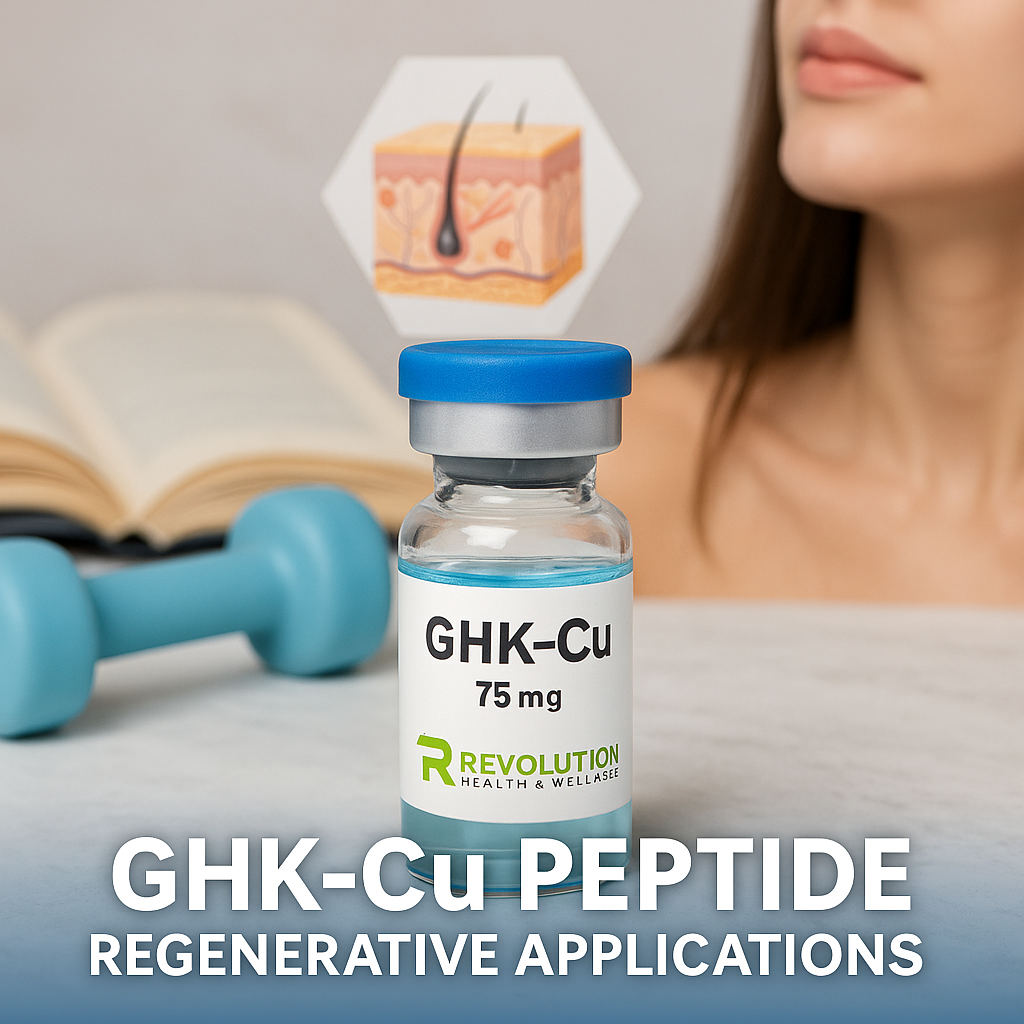
GHK-Cu is a copper-binding peptide that has become increasingly well known in research related to skin biology, connective tissue, regeneration, and cellular processes. The compound combines the naturally occurring peptide GHK with copper, creating a complex that has been investigated for its potential influence on several biological pathways.
A 200 mg lyophilized GHK-Cu preparation is intended for controlled research use and requires appropriate storage and handling. Looking at the compound itself, its proposed biological functions, and the practical characteristics of a research preparation helps provide a clearer picture of why copper peptides continue to attract scientific interest.
**What Makes GHK-Cu Different?**
GHK-Cu consists of glycyl-L-histidyl-L-lysine associated with copper ions. GHK is a small peptide naturally found in the human body, while copper is an essential mineral involved in numerous enzymatic and cellular processes.
The combination of these components is particularly interesting because peptides can act as signaling molecules or interact with biological pathways. Researchers have therefore investigated GHK-Cu in connection with processes involved in tissue structure and repair.
Its relatively small molecular structure has also contributed to its interest in cosmetic and biomedical research.
**Research Into Skin Health**
One of the most widely discussed areas of GHK-Cu research is skin biology. The compound has been studied in relation to collagen, elastin, and other components of the extracellular matrix.
Collagen provides structural support, while elastin contributes to flexibility and elasticity. Changes in these proteins are associated with normal aging and environmental damage to the skin.
Research into copper peptides has consequently explored whether GHK-Cu can influence pathways involved in maintaining or remodeling connective tissue.
**Interest in Tissue Regeneration**
GHK-Cu has also been investigated for its potential role in tissue-repair mechanisms. Regeneration is a complex process involving cell migration, extracellular matrix remodeling, blood-vessel formation, and inflammatory signaling.
Because copper peptides may interact with some of these processes, GHK-Cu has been examined in experimental models involving tissue repair.
Such research is useful for understanding biological mechanisms, but experimental observations should not automatically be interpreted as evidence that a particular product will produce the same results in humans.
**Potential Antioxidant Properties**
Oxidative stress is another area relevant to copper peptide research. Reactive molecules can influence cellular structures and contribute to various biological changes.
Researchers have explored whether GHK-Cu can affect pathways associated with oxidative stress and cellular protection. This has added another dimension to interest in the compound, particularly in studies focused on skin and tissue biology.
The significance of these effects depends on the experimental conditions and requires careful scientific interpretation.
**GHK-Cu and Inflammatory Processes**
Inflammation is a normal component of the body's response to injury, but excessive or prolonged inflammatory activity can affect tissue function.
GHK-Cu has been investigated in relation to inflammatory signaling and tissue remodeling. This research has helped generate interest in the compound as a potential research tool for understanding interactions between inflammation and regeneration.
At the same time, these findings do not establish GHK-Cu as a general-purpose anti-inflammatory treatment.
**Why Copper Matters**
Copper is an essential trace element required for several biological functions. It participates in enzymatic reactions and contributes to processes involving connective tissue and antioxidant defense.
The presence of copper in GHK-Cu is therefore more than a simple formulation detail. It is an integral part of the molecular complex being studied.
However, the fact that copper is essential does not mean that increasing exposure to copper-containing compounds is automatically beneficial. Biological effects depend on concentration, formulation, route of exposure, and individual circumstances.
**The 200 mg Lyophilized Format**
Research preparations containing 200 mg of GHK-Cu are commonly supplied in lyophilized form. Lyophilization removes water from the material under controlled conditions, helping maintain stability before reconstitution.
The preparation is supplied as a dry material that requires reconstitution with the appropriate solution according to the product specifications.
This format is different from ready-to-use cosmetic preparations and emphasizes that the material is intended to be handled in a controlled environment.
**Storage Requirements**
Peptides can be sensitive to environmental conditions, making proper storage an important part of maintaining their quality.
For a lyophilized GHK-Cu preparation, protection from excessive heat, moisture, and light is important. After reconstitution, the material generally requires refrigerated storage according to the manufacturer's instructions.
Handling should also be gentle. Appropriate storage and preparation procedures help preserve the characteristics of the research material and reduce the possibility of degradation.
**Quality Control and Batch Verification**
When working with research peptides, knowing the identity and quality of the material is essential. Batch information, purity documentation, authentication procedures, and appropriate manufacturing controls can all contribute to confidence in a research material.
A properly sealed vial and clear labeling are useful practical features, but researchers should also consider the documentation supplied with the specific batch.
Reliable records are especially important when experimental results need to be reproduced or compared.
**GHK-Cu in Cosmetic Research**
The connection between copper peptides and skin structure has made GHK-Cu particularly interesting to the cosmetic research field. Scientists have investigated its potential relationship with collagen formation, skin remodeling, and the appearance of aging-related changes.
However, a laboratory peptide and a finished cosmetic formulation should not be considered identical. A topical product may contain additional ingredients, use a different concentration, and have been formulated specifically for application to the skin.
The intended use and formulation should therefore always be taken into account.
**Research Into Hair and Scalp Biology**
GHK-Cu has also generated interest in studies involving hair follicles and scalp tissue. Hair growth is controlled by a complex biological cycle involving cellular signaling, vascular support, hormones, and the surrounding tissue environment.
Researchers have explored whether copper peptides could influence some of these pathways. Although this area remains interesting, experimental research should not be confused with an established treatment for hair loss.
**Responsible Approach to Research Peptides**
GHK-Cu https://www.ecbt.org/product/ghk-cu-200mg-zphc-copper-peptide/ should be approached as a research compound rather than as an ordinary dietary supplement. Appropriate laboratory practices, accurate measurement, controlled preparation, and suitable storage are important for obtaining meaningful experimental results.
It is also essential to distinguish research findings from medical claims. A compound may demonstrate an interesting mechanism in a laboratory setting without having been established as safe or effective for a particular human condition.
**Conclusion**
GHK-Cu is a copper-binding peptide with a broad research profile encompassing skin biology, connective tissue, tissue repair, oxidative processes, inflammatory pathways, and potentially hair-related mechanisms. Its combination of a small peptide structure and copper makes it an intriguing subject for continued scientific investigation.
A 200 mg lyophilized preparation is designed for controlled research applications and requires attention to storage, reconstitution, handling, and quality documentation. As research continues, maintaining a clear distinction between experimental findings, cosmetic applications, and clinically established treatments remains essential for understanding the true potential of GHK-Cu.